

A Chaplain’s Thoughts: Leo Our Pope
A Chaplain’s Thoughts: Leo Our Pope
By Rev. James F. Quigley, O.P. ’60
Associate Chaplain, National Alumni Association
Those who refer to “our Pope” are Roman Catholics and Eastern Rite Catholics who believe the Pope to be the successor to St. Peter and universal pastor of the Church. Other Christians and people of other religions or no religion generally respect the Pope as a significant religious leader and teacher.
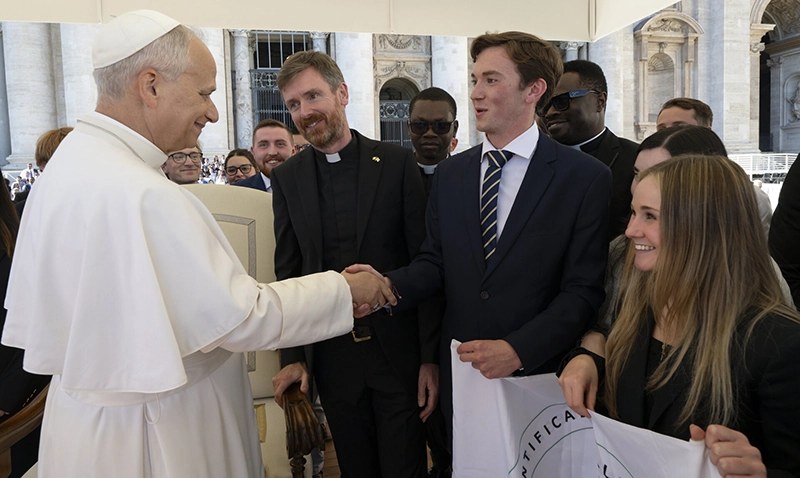
Pope Leo XIV, still new in his ministry, has embraced his call to be universal pastor of the Church with humility, enthusiasm, dedication, courage, and faith in the Holy Spirit. He has begun to visit believing communities in places such as Turkey, Lebanon, Monaco, and several countries in Africa. He is consulting with others about change through meetings with cardinals, bishops, and many other women and men. He has engaged in his teaching and preaching ministry in a variety of ways by preaching and through his writings, interviews, and meetings.
Pope Leo clearly understands that his vocation is to promote the gospel of Jesus and propose those values to anyone who will listen. That Christic vision permeates the fabric of the life of persons, communities, nations, of the whole world. When teaching, preaching, and promoting those values, Pope Leo is not doing so as an economist, a politician, or a military consultant. Rather, he speaks a spiritual, moral vision for human life as the gift of God.
That teaching/preaching at times might challenge the view of those who see things differently. Some may not understand the Pope’s teaching or accept it or like it. Nevertheless, Pope Leo does not water down such gospel vision. When he speaks as universal pastor, as vicar of Christ, he is not simply offering opinions on theology but is preaching what we believe Jesus teaches. Issues such as immigration, war, peace, nuclear armament, abortion, euthanasia, sex trafficking, racism, unjust poverty, corruption, violence, capital punishment, etc., certainly are political, economic, and social issues but they are also always more. They are moral issues about life for human persons, women and men, children and elderly, the sick and poor, sinners, all sisters and brothers. That is what concerns the Pope.
Bishop Daniel Flores, a very astute student of Thomistic thought, offers these words: “… public officials may opine about theology, as is their right … The successor of Peter teaches. This is his office … If what he teaches doesn’t sound like what we want to hear, we should admit the likelihood that the problem is in what we want to hear and not in what he teaches.”