

Gizem Zencirci, Ph.D., winner of the Accinno Faculty Teaching Award
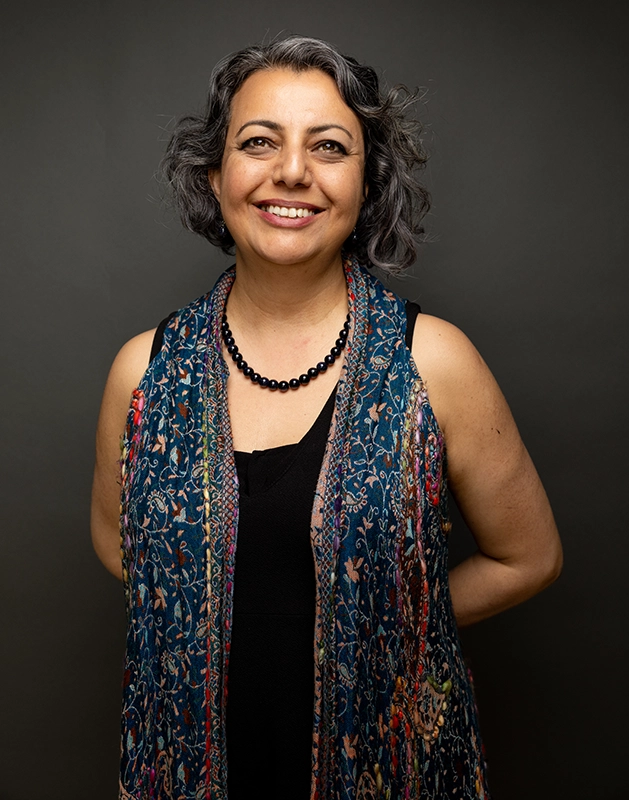
Gizem Zencirci, Ph.D, winner of the Accinno Faculty Teaching Award
Gizem Zencirci, Ph.D., an associate professor in the Department of Political Science and director of the Middle East Studies Program, is the winner of the 2025 Joseph R. Accinno Faculty Teaching Award, the highest honor awarded for teaching at Providence College. She has been a faculty member since 2013 and has a Ph.D. in political science from the University of Massachusetts, Amherst.
Zencirci was the faculty speaker during Academic Convocation, the official start of the academic year, on August 29, 2025. Watch her welcome address to the Class of 2029 and read her remarks below.
The value of not being comfortable
By Gizem Zencirci, Ph.D.
Good morning, everyone, students, families, faculty. Let me start with the most important word today. Welcome to Providence College. You made it here. That’s no small thing. And now you’re standing at the beginning of something new, exciting, and let’s be honest, a little bit terrifying.
I remember a similar feeling I had when I arrived in the USA 20 years ago. It was this very week. Even though I had a student F1 visa granted to international students for graduate study, I had to answer a long list of intimidating and pointed questions by the immigration and customs officer at the Boston Logan airport. Afterwards, I felt deeply uncomfortable and scared as I faced the unknown in front of me. I had come to this country to live with people I barely knew in a town I had never been to. I was meant to study and become an expert in my second language. And I was hoping to become a professor in a major that had been my second choice. I succeeded in achieving this dream. But the path was filled with uncomfortable moments, encounters, and conversations. It turns out being an immigrant is a deeply uncomfortable experience.
And that’s what I want to talk about today. The value of not being comfortable. Your first day of classes will be filled with a sense of anticipatory unease. Questions like, where should I sit? Is that the kid from orientation? How often should I raise my hand? What will be at Raymond after class? Is this even the right classroom? Is this the right major for me? And where is the bathroom?
Over time, those initial questions, that early discomfort will subside and you will become comfortable, we hope, at Providence College. But for many of you during the course of your educational journey, a new and more valuable form of being uncomfortable will hopefully emerge. You will learn to ask uncomfortable questions. You will hear about the uncomfortable aspects of the human history. And you will experience the discomfort of maintaining a critical stance.
The values in a college education are multiple. Writing skills, public speaking skills, reading skills, how to raise your hand in a Western Civ class even when you haven’t done all the reading for that class, etc. In terms of social life, one skill that many have recommended is getting out of your comfort zone.
Getting out of your comfort zone is indeed valuable, but one of the things I try to cultivate in my classroom goes beyond that. I would go as far as to say that what makes a college education valuable is the fact that part of our job is to make you uncomfortable, but also to give you the skills to learn, grow, and develop while not seeking easy answers or closure on questions that require additional thought. We hope to instill in students the self understanding that they can learn even when the material is challenging or the conversations are uncomfortable. We do not grow as human beings unless we figure out how to learn from and sit with situations, encounters, and dialogues that are making us uncomfortable.
At some point in your college career, you will probably find yourself during a conversation in your dorm, at a club meeting, or a while in a classroom that will lead you to question your assumptions about the world. Maybe you will have to read more, ask different kinds of questions, or reassess what you had previously known or learned. In other words, you will learn how to sit with that discomfort.
And let’s be honest, sometimes students are not the only ones who are uncomfortable. Teaching uncomfortable material forces faculty, too, to reckon with our blind spots, to admit when we’re unsure. It demands that we model vulnerability, not authority, as a form of leadership. In this current political moment where even the simplest of questions, what happened, who matters, what is true, feel politically charged, where AI, which has never sat uncomfortably with its thoughts, will be deployed across our social space. Historians of the future will look back on this moment and want to know what young people did to survive and live.
Much of that answer will fall upon the values you stand for in the coming years, the activities and creative ideas you bring to the world, and the connections you make to achieve your goals. But part of that answer also depends on the skills you acquire — if you learn how to sit with discomfort. Hence, this is why I think our role as educators has never been more vital. Not to avoid politics, but to contextualize it, to help you distinguish between disagreement and denial, between discomfort and harm, between noise and nuance. As faculty members, we know that if we do not help you learn how to sit with discomfort in a classroom built on trust and reflection, that means we have left you defenseless out there in a world that is that too often rewards rigidity over curiosity and blind anger over empathy.
My humble advice to you, in short, is that please do not run away from being uncomfortable. Every day, everywhere you find yourself, every encounter with others is an opportunity to learn, even if you do so through discomfort. Remember, it is part of the human condition to seek the comfortable. But the truth is that there are no guarantees, no maps, no toolkits that will ensure your next couple of years are productive, valuable, or worth every penny. The only person who can make that happen is you. And also remember, even when you think that you have a map, the destination will change as you walk the path.
Congratulations again. We are so excited to meet you individually and welcome you into our classrooms and our community.