Running for Ray Treacy
Running for Ray Treacy
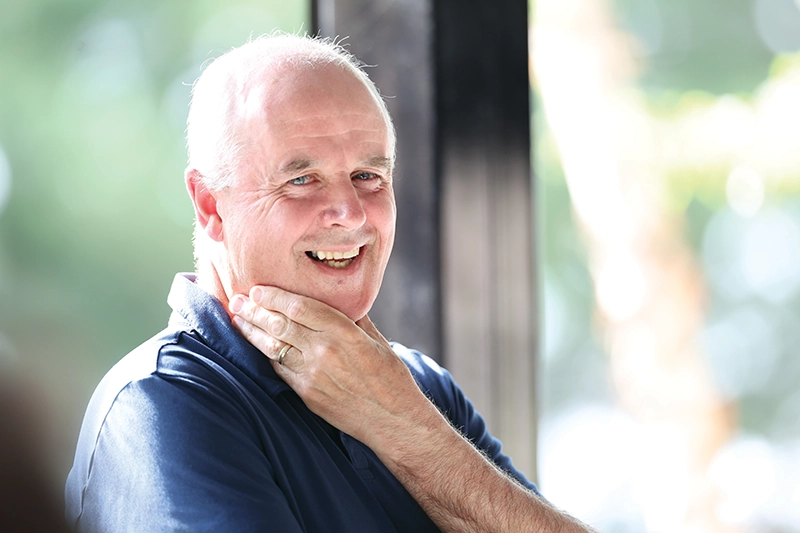
Ray Treacy ’82 retired on June 30, 2026, after more than 40 years as head coach of men’s and women’s cross country and track and field. His career included the college’s first NCAA national championship, captured by women’s cross country in 1995. Gladys Ganiel ’99, a runner on that team and now a professor at Queen’s University Belfast, reflects what on what it meant to run for Ray Treacy.
By Gladys Ganiel ’99
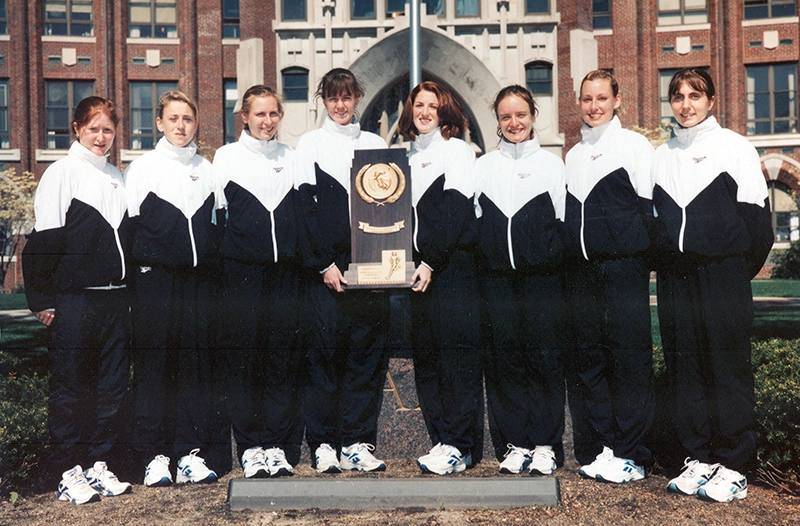
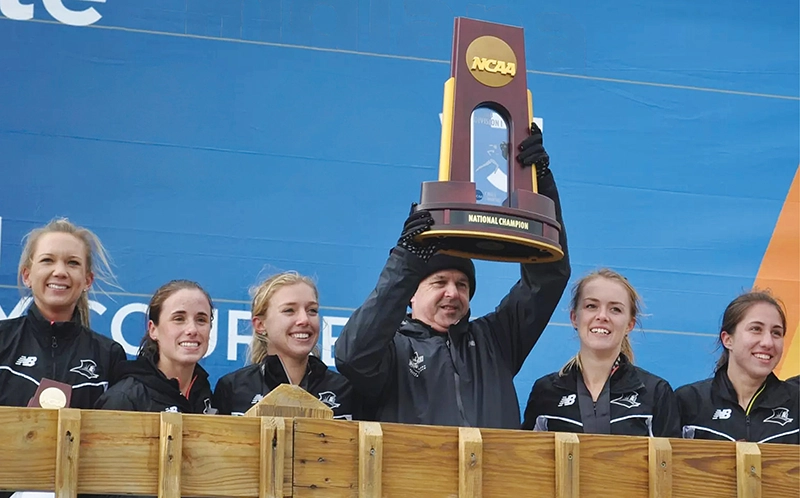
I still remember our team huddled together on a cold, windswept field in Ames, Iowa, in November 1995, waiting for the results of the national championship to be announced. Then came the exuberant joy of Ray and our assistant coach, Andy Ronan, who promptly rolled down a nearby hill when our victory was confirmed. Like carefree children, we followed. Even after a grueling race, we were too elated to mind climbing back up again. In the days before mobile phones, our next task was to find a phone booth so we could call friends back in Providence with the news.
It was a privilege to be part of what was then the greatest achievement of Ray’s coaching career. Since then, there have been so many honors and championships that I’m no longer sure it was his greatest. But it was the college’s first NCAA title, and that will always make it special.
That day captures something important about Ray. He celebrated his athletes’ success with genuine delight, but he never made it about himself.
Four years in collegiate athletics pass remarkably quickly. Success in distance running, however, rarely does. Most athletes do not reach their peak until several years after university, and many women achieve their best performances well into their 30s.
For a collegiate coach, that creates an obvious temptation: maximize what each athlete can achieve during the four years they are in the program. I remember distance runners from other universities contesting three or even four races at the same meet. Ray would never have done that. At track meets we ran one distance race, or perhaps two middle-distance events. He understood that short-term success was never worth compromising an athlete’s long-term development. Some of my teammates would go on to become Olympians, and Ray refused to sacrifice their future for an extra collegiate victory.
That approach required humility. It meant accepting that a coach’s greatest achievements might not come until years after an athlete had graduated. It meant insisting that tired, sick or injured athletes rested, even when important races beckoned. It meant trusting that years of patient, consistent training would ultimately produce better athletes than endless demands for more.
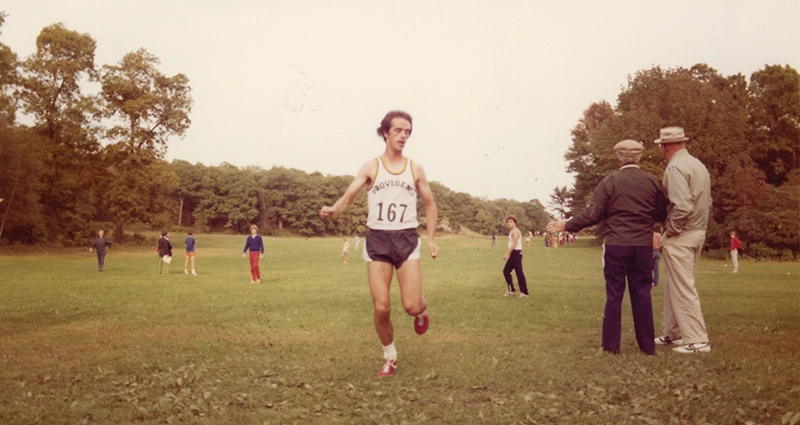
Ray had been an outstanding athlete himself, representing Ireland at the World Cross Country Championships and winning a team silver medal there in 1979. One day in his office he told me that, when he competed, his greatest fear was not losing but failing to get the best out of himself on race day.
Those words stayed with me long after I graduated. Whenever I stood on a starting line, they reminded me that I could not control what anyone else did. My responsibility was simply to get the best out of myself. The result would take care of itself.
Ray coached multiple All-Americans, national record holders, and Olympians. I wasn’t one of the stars of our championship team, but that never affected the care he invested in me. Years after I graduated, he still answered emails asking for training advice. Nearly two decades later, that guidance helped me qualify to represent Ireland in the marathon at two European Championships.
Perhaps the best example of Ray’s philosophy came at the end of each academic year. Before we headed home for the summer, he handed each of us two calendar pages with every day’s training written carefully in his own hand. There were long runs, interval sessions, and recovery days. The word easy appeared regularly, underlined twice.
Those double lines have stayed with me.
Ray understood something that ambitious athletes often struggle to learn. Getting us to work harder was rarely the challenge. Most of us were already highly motivated. The greater challenge was teaching us patience: knowing when to hold back so that we could continue improving over months and years rather than burning ourselves out in pursuit of immediate success.
But Ray was never interested only in producing faster runners.
I remember telling him that I was writing my political science dissertation on religion and politics in Ireland. He asked if he could read it. Later I saw him and Andy passing the printed copy back and forth between them on a flight home from a meet. It mattered enormously to me that they took an interest in something entirely unrelated to athletics.
That same commitment shaped opportunities that changed my life. Ray and the wider Providence athletics department nominated me for the Walter Byers Scholarship, the NCAA’s highest academic honor for student-athletes. Before my interview, they organized a mock interview panel so I would have the best possible chance of performing well.
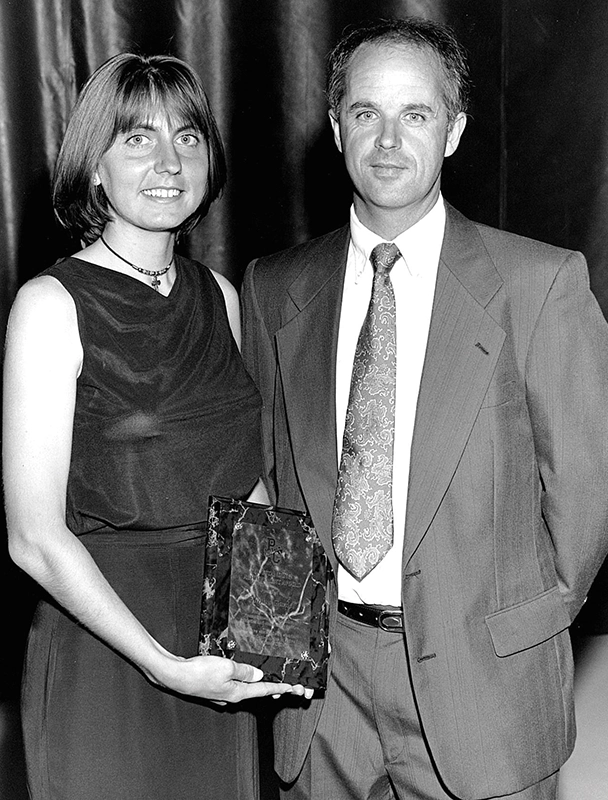
Winning that scholarship transformed my future. Coming from a family for whom the cost of university education would have been prohibitive, I was able to pursue a master’s degree in Ireland. That led to a doctoral scholarship and, eventually, to my current position as professor in the sociology of religion at Queen’s University Belfast.
I also remember another conversation in Ray’s office. He told me he loved his work so much that it never felt like work. At the time, I found that encouraging because it reflected his commitment to us as athletes. Looking back now, I realize he was also showing us something about vocation. It is possible to find work that is deeply fulfilling.
Today I can honestly say the same about my own career.
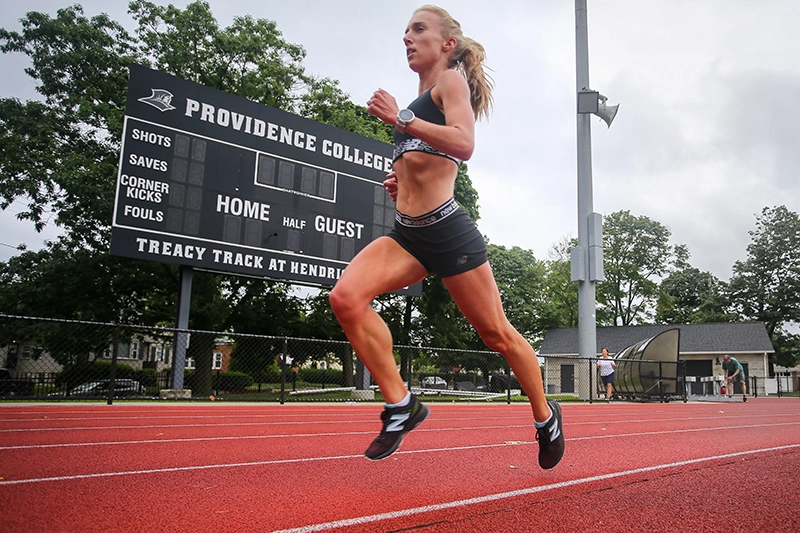
When I ran at Providence, there was no track on campus. I was delighted when the Ray Treacy Track and Field Complex opened in 2014. Ray appreciated the honor but seemed almost embarrassed by it. He joked that having a track named after him made him feel as though he ought to be retired — or dead.
That response seemed entirely in character.
For Ray, coaching was never about building his own legacy. It was about helping other people build theirs. Looking back over Ray’s career, I realize that his greatest achievement cannot be measured only by national championships, All-Americans, or Olympians. They are found in the countless lives he shaped, often long after the final race had been run.