
Farewell to the School of Continuing Education
Farewell to the School of Continuing Education
A proud tradition with a history as old as Providence College
By Vicki-Ann Downing ’21
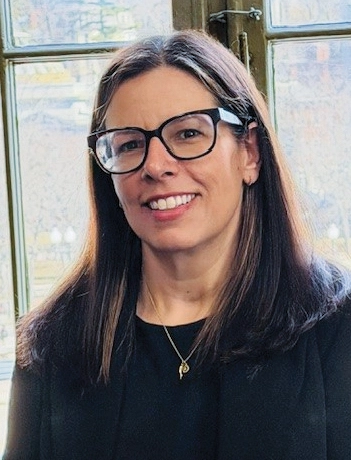
Michaela Deuse will make Providence College history when she crosses the stage in Peterson Recreation Center to accept a bachelor’s degree in professional studies on May 14, 2026. She will be one of the last students to graduate from the School of Continuing Education.
The college announced in April 2023 that it would stop admitting students to the SCE. The decision followed a period of declining enrollment from a peak in the 1990s and the changing landscape of adult education. The college said it would instead focus on graduate courses and non-professional certificate programs and promised to support all SCE students through the completion of their degrees.
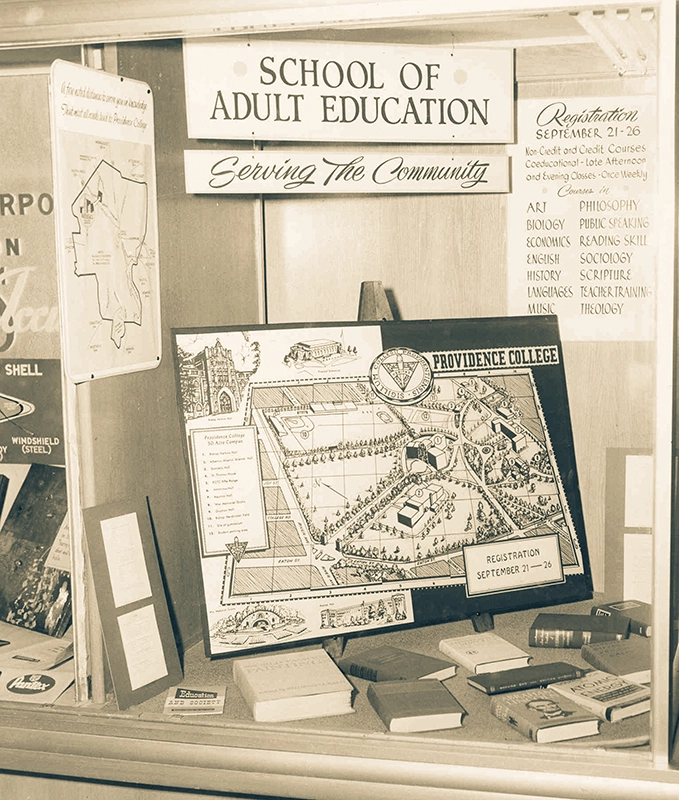
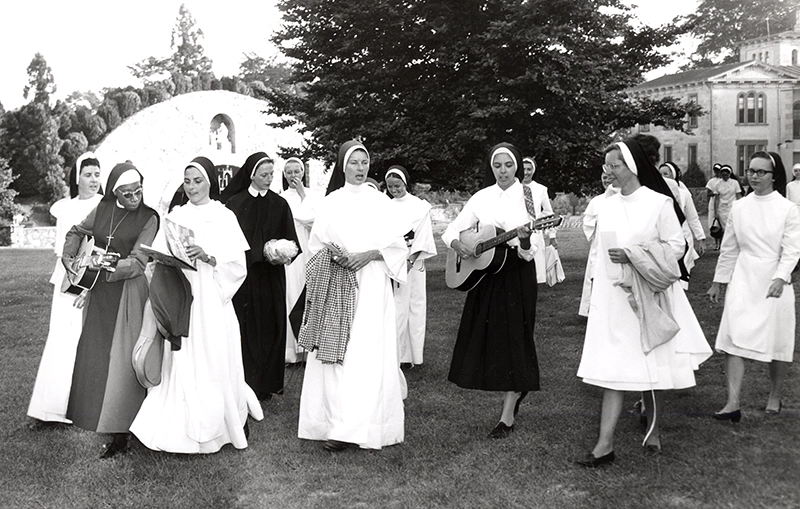
SCE’s history is as long and as proud as the college’s own. In October 1918, a year before Harkins Hall welcomed its first all-male class, Dominican priests began teaching courses to religious sisters in convents. That program evolved into a summer school known as the Sisters’ College in 1925. The Sisters’ College became the Extension School in 1930, when lay students were admitted. The name changed to the School of Adult Education, the Extension Division, the Evening School, and finally, in 1971, to the SCE. An estimated 4,000 alumni have been awarded associate and bachelor’s degrees in that time.
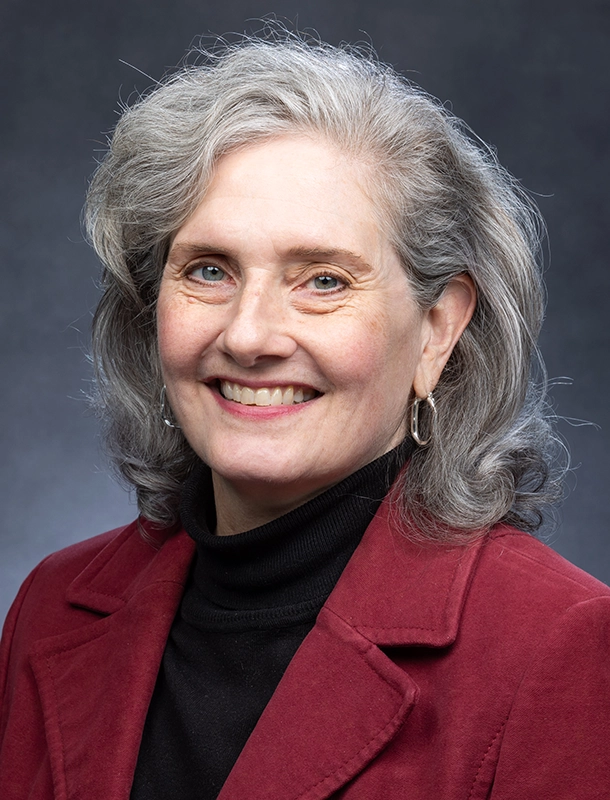
“There was never a typical SCE student,” said Madeleine Metzler, associate dean in the School of Arts and Sciences, who joined the SCE as associate dean in 2006 and served three times as acting dean. “Some finished their degrees in their 80s because it was something they had always wanted to do. Some entered at 18, finding it reasonable and flexible. The majority were adults, late 20s to early 40s, who had some college, stopped, but valued education and always wanted to return. When life circumstances allowed, they were able to finish their degrees because it all came together. It all clicked.”
Deuse was like that. She attended Rhode Island College for several years after high school while working full-time but did not complete a degree. Some years later, a friend suggested she attend an SCE information session, where she learned that PC would accept her RIC credits. She took her first course in 2015, took time out to marry in 2016 and give birth to a daughter in 2017, and when she learned PC would sunset the SCE, took two courses each semester to finish.
“I’m so excited,” said Deuse, an administrative manager for the Rhode Island Supreme Court, who also earned a legal studies certificate. “As sad as it is, I’m glad the college offered me the opportunity to finish on my own terms and on my own timetable.”
Continuing education was here even before the first undergraduates ever stepped foot on campus.
madeleine metzler
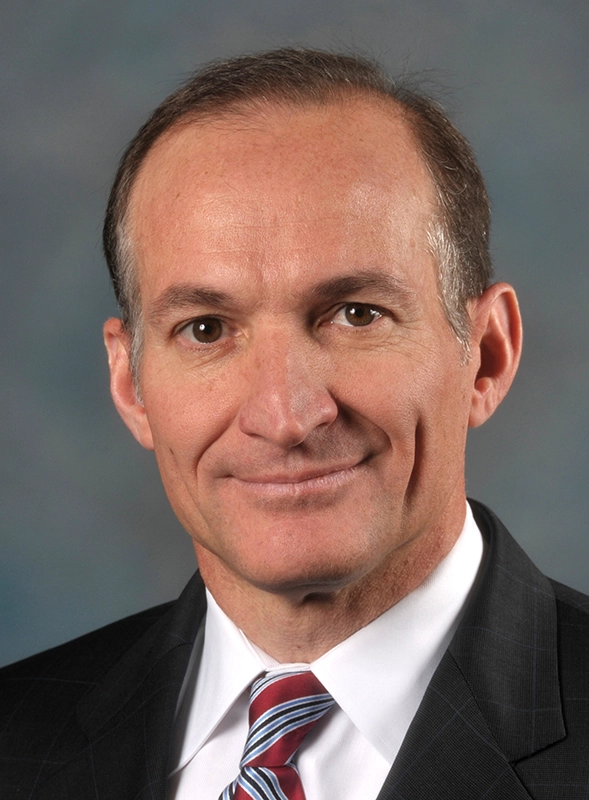
Marc Paulhus ’84SCE is among the most celebrated SCE graduates and the most vocal in his appreciation. In 1981, at age 19, while working full-time as a bank teller, he enrolled in his first evening classes. Three years later, he graduated with a bachelor’s degree in business management. In 2014, he became president of Citizens Bank Rhode Island. He now is based in Chicago, where he is a board member of Crossroads Equipment Lease and Finance.
“Without SCE, I wouldn’t have a college degree,” Paulhus said. “I had to work and I needed tuition assistance, and without those, there’s no undergraduate degree, there’s no future. Providence is the foundation on which the entire career was built. Like my faith, like my ethnic background, Providence College is part of who I am.”
SCE students found academic and advising support from their first telephone call to the dean’s office through to graduation. They were taught by adjunct faculty from other institutions and working professionals who shared their expertise. PC professors often taught SCE courses as well. It was easy for students to build relationships because class sizes were small.
“Professors recognized and appreciated the dedication that SCE students brought to the classroom and their life experiences,” Metzler said. “The students appreciated each other. It was a community. Strong friendships were built after only a couple of semesters together.”
Providence is the foundation on which my entire career was built.
Marc Paulhus ’84SCE
There were opportunities for SCE students to form their own identity. The Aquin Circle, begun in 1936, held parties and hosted speakers. A one-page newsletter, Night School Notes, was published in 1951 with information about courses and social events. Eta Lambda, SCE’s chapter of Alpha Sigma Lambda, the national honor society for continuing education students, was established in 1991.
There were notable firsts. SCE offered PC’s first online course to students in the fall of 1999. In 1973, a connection made by Rev. Francis Nealy, O.P., chaplain of the Providence Fire Department, established the first fire science degree program in Rhode Island. At the time, municipalities were offering financial incentives for public employees who earned education credits. At one point, the public safety director for Providence and the director of the state fire academy had PC degrees, Metzler said.
“It was classic PC — a Dominican friar saw a need and made the connections, and something special happened,” Metzler said. “You had leaders trained in the Catholic and Dominican dynamic and the ripple effect of those values.”
Student-athletes who left college to pursue professional opportunities often returned to complete degrees through SCE. Among them are baseball player John MacDonald ’10SCE and basketball star God Shammgod ’15SCE. Veterans took advantage of benefits to take courses. So did PC employees and their families, who were able to complete associate and bachelor’s degrees for free, and to take prerequisite courses to prepare for graduate programs. The result, Metzler said, was “a wonderful staff member who feels a great connection to the college and grows intellectually and professionally as an employee.”
For many years, SCE benefited from being the only college in Rhode Island to offer continuing education courses. In addition to degree programs, it held enrichment classes on a variety of topics. In 1958, the school partnered with WJAR-TV for a class about the relatively new medium of television. The course, Philosophy of Communication, was taught by Rev. John Reid, O.P. and Betty Adams, host of Channel 10’s The World Around Us. In the 1980s, you could study Ornithology: Birds in Rhode Island, or Mills, Mansions, and Malls: A Social History of Rhode Island Architecture. You could earn associate degrees in liberal studies or paralegal studies, labor relations, and nursing home administration.
“Continuing education was here even before the first undergraduates ever stepped foot on campus,” Metzler said. “There was continuing education from the start of the college. It took wisdom and perspicacity to have anticipated the need for this.”
As sad as it is, I’m glad the college offered me the opportunity to finish on my own terms and on my own timetable.
Michaela Deuse ’26SCE
As the college entered the 21st century, though, it became harder to attract students, in part because there were so many options, including online courses and free state college classes in Rhode Island. Metzler was tasked with shepherding the remaining students through to degree completion. A few more will finish during the next couple of years, but for the most part, SCE’s work is done.
“It was a very different path than traditional college,” Deuse said. “You have more of an appreciation for it. I’ve loved every class. What kept me at PC was the experience on campus. I felt a sense of community. The class hours meant time away from my family, so it was important for me to do well. It was prestigious. It’s something I’ve accomplished for myself.”