

Frequent Friar John Puleo ’53 has been a men’s basketball season ticket holder for 67 years
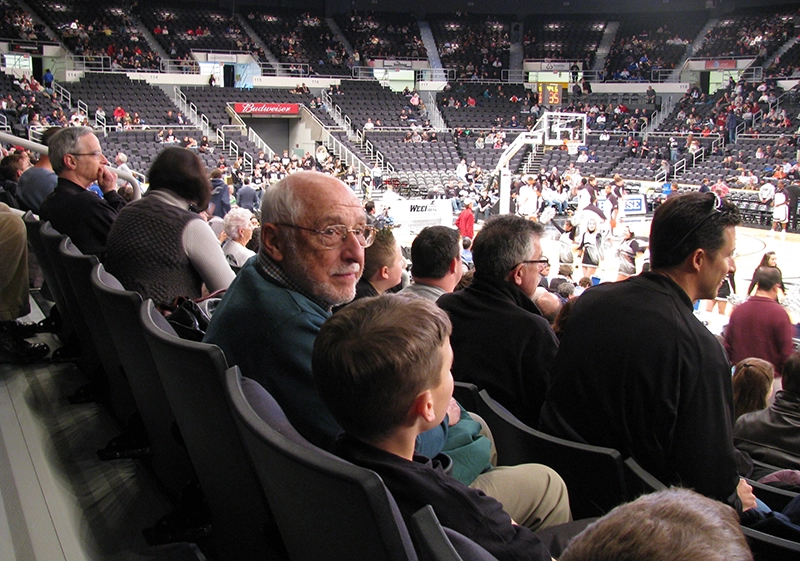
Frequent Friar John Puleo ’53 has been a men’s basketball season ticket holder for 67 years
By Tom Puleo
At the Amica Mutual Pavilion in downtown Providence, in one of college basketball’s best atmospheres, John Puleo, DDS ’53 doesn’t wave a foam finger or spray beer in the student section.
That’s not my father’s style, not at age 94 anyway.
But if you’re looking for the most loyal Providence College basketball fan around, check him out in Section 107, Row KK, near half court.
He’s had PC men’s basketball season tickets for 67 years, likely the longest run in school history, and maybe anywhere.
His tenure covers all 52 seasons at the Providence Civic Center – now “the AMP” – and 14 years before that at Alumni Hall on the Providence College campus: the entire Friars basketball story.
He sits with my mother, Rachel Puleo, 89, who has been right beside him for nearly every tipoff.
Their long run is coming to an end. This is their last season. They’re not getting any younger, and it gets harder each year to make it to games.
It’s time.
“It’s been a big part of our lives,” John Puleo said. “The Friars, I guess you could say, are like a part of the family.”
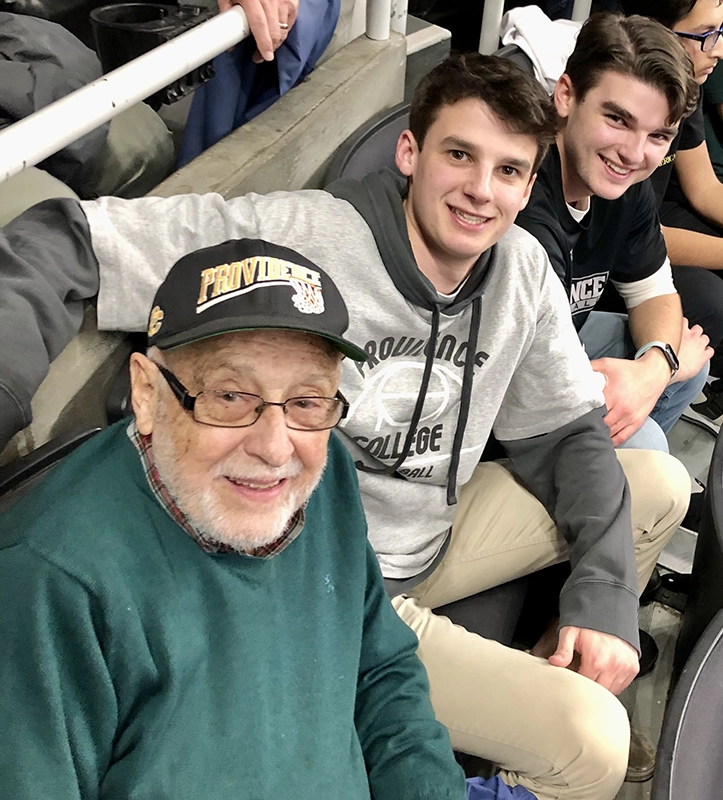
He grew up on Admiral Street, four blocks from PC, sneaking into games at Harkins Hall.
He remembers following the Friars to their next two homes – Mount Pleasant High School and, in 1955, the new on-campus Alumni Hall – capacity 2,620 – now called Mullaney Gymnasium.
He first bought season tickets in 1958, a year after dental school. He paid about $20 for each seat for the whole season.
He watched Coach Joe Mullaney ’65Hon., ’98Hon. lead early Friar greats like Lenny Wilkens ’60, ’80Hon., a future Naismith Hall of Famer.
In 1972, he followed the Friars again, this time downtown, into the new 12,000-seat Providence Civic Center.
He’s been there ever since, in some of the best seats in the house, across the court from the PC bench, about a dozen rows back.
“You get a different feel for the game being so close,” Puleo said. “You really get a chance to see how good the players are.”
Through the years, he’s seen the Civic Center crowds grow louder — and more intense.
The early, friends-and-relatives crowds watched Coach Dave Gavitt ’89Hon. coach local boys Ernie DiGregorio ’73 and Marvin Barnes ’74 to the school’s first Final Four in 1973.
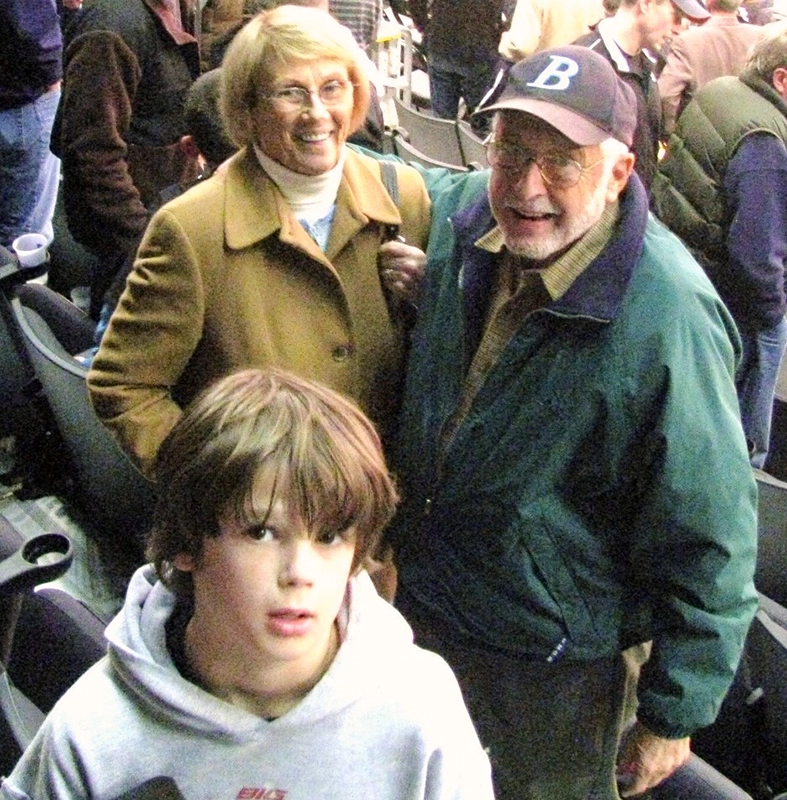
I was there, too, sitting with my parents and my brother, John Jr. — two East Greenwich kids witnessing Friar history.
PC was the first school in the Northeast to play a national schedule in a downtown arena — the prototype for the BIG EAST. All-Americans DiGregorio and Barnes took the showtime Friars to a national level that, back then, was enjoyed in New England only by Boston’s pro teams.
“Obviously very special,” Puleo said. “What can you say — a rare event when you have two players from Rhode Island at that high a level of play.”
Next came the raucous, hockey-style crowds of the mid-1980s, when 34-year-old head coach Rick Pitino and starting point guard Billy Donovan ’87 rode the new three-point shot to the school’s second Final Four.
Those crowds are the fiercest any of us remember. There was a vengeance quality to the building. PC hadn’t been good for years, and Pitino — young, brash and Italian — touched off something visceral for the Friar faithful.
“There was a whole electricity in the air with Pitino,” Puleo said.
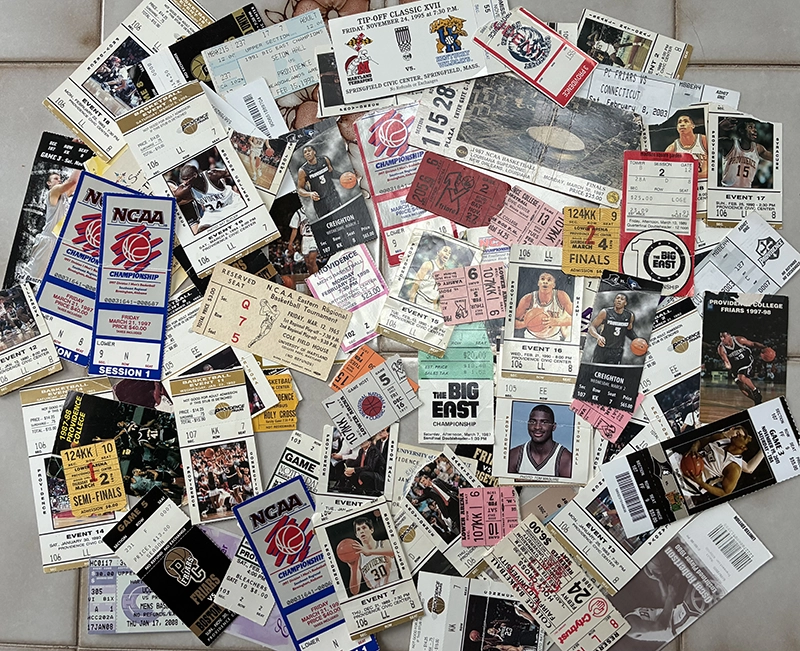
The noise picked up again in the 2000s under Coach Ed Cooley’s rah-rah hand. The renovated Civic Center had a new name: The Dunkin’ Donuts Center – or The Dunk – and was ground zero for newly branded Friartown.
Even today, two years after Cooley’s bitter departure to Georgetown, coach Kim English began the season with sold-out season tickets and a waiting list.
Today’s Amica Pavilion is a mashup of previous eras — longtime, dedicated Friar fanatics, and the ardent student section singing along to Taylor Swift songs like European soccer rowdies. For visiting teams, the AMP is considered one of toughest places to play in the country.
Puleo could do without the ear-splitting music and zany promotions. But it’s still the best ticket in town.
“One word: different,” he said. “There’s a Jumbotron and more fan involvement than the old days, when people were there primarily to watch games.”
Looking back, Puleo remembers the Blizzard of ’78 game, just a few days after the epic storm. Blue-blood North Carolina and Coach Dean Smith flew in as the city and T.F. Green State Airport were still digging out from three feet of snow.
The Sunday noontime show went on despite a downtown parking ban, and the Puleos managed to get there, parking in a family friend’s driveway on Federal Hill.
“Luckily, we were in walking distance,” Puleo said.
Another standout was the 1987 Georgetown game when Pitino confronted mythic Hoyas Coach John Thompson ’64 on the sideline at half court, signaling an end to the Friars’ patsy days in the BIG EAST.
More recently, Puleo remembers the Friars’ 2022 win over Creighton for the school’s first regular-season BIG EAST championship.
The greatest PC player he ever watched? Jimmy Walker ’67 — the only player from a New England college ever taken No. 1 overall in the NBA draft.
“Between the legs, double pump, top of the key,” Puleo recalled, “I had never seen anybody do that.”
His all-time favorite PC game took place far from the Civic Center, at the 1973 East Regional Final in Charlotte, North Carolina.
The Puleos were courtside as PC ran past No. 10 Maryland behind Ernie D.’s 30 points in 27 minutes — cutting down the nets in the heart of ACC country.
“Of all the games I’ve watched — that’s the one I remember most,” Puleo said. “They couldn’t stop Ernie.”
Through the years, Puleo has sat through his share of meaningless games in half-empty buildings on cold winter nights.
“The diehard fans still went,” he said.
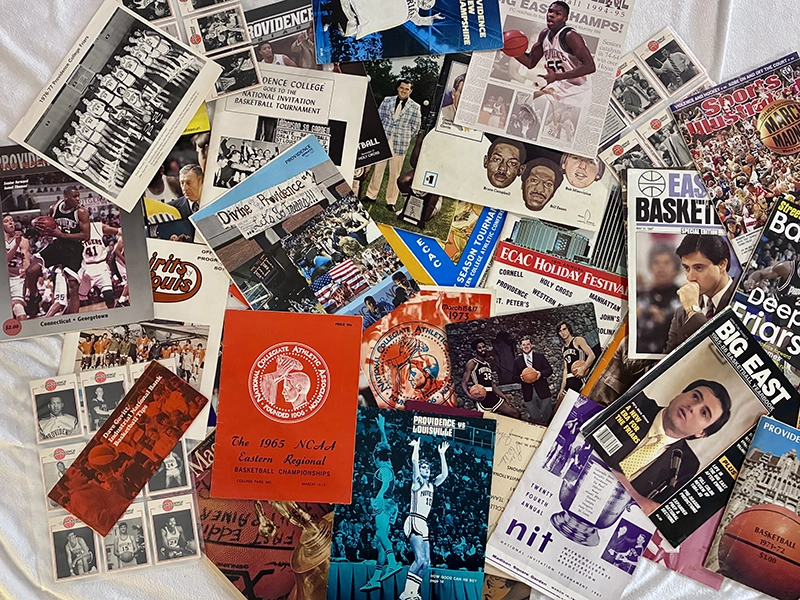
At a BIG EAST game in 2020, PC’s then-senior associate athletic director Steve Napolillo ’98 and the school graciously recognized him at halftime.
At the start of the 2025-2026 season, Napolillo lauded those who have supported the Friars over many years and sent my father a special thank you.
“We are grateful to fans like John Puleo, who has been a season ticket holder since 1958. He has experienced incredible moments over the years and he has stayed behind the team during difficult times.”
Amid recent NCAA changes, Puleo tries to remain positive in the NIL era, with college players getting paid and revolving door rosters, but says something has been lost.
“It’s not college athletics anymore, it’s semi-pro. The bottom lines fuels everything.”
My parents hope their tickets — at $2,500 for the pair — can remain in the family. I am the leading candidate, living in West Hartford, Connecticut, as an expatriate Frequent Friar.
They go to fewer games now. Parking can be a challenge. The 9 p.m. TV tipoffs are too late for them.
But for at least a few more games this season, they hope to be in their seats, reliable as the student pep band, timeless as a Friar fast break.
“We’re always going to be fans,” Puleo said.
Tom Puleo is a former staff writer at the Hartford Courant and a former journalism professor at Central Connecticut State University. He wrote this story for the Rhode Island edition of the Boston Globe.
The Fund for Providence College helps sustain the traditions and sense of belonging that shape life as a Friar. Support through the annual fund strengthens the connections that unite the Friar Family across generations.
More from the Spring 2026 magazine