

Working the media
Working the media
Mike Raia ’05 helps Providence College professors tell their stories
By Carolyn Cronin
Offer something new, unique, or provocative — ideally all three. That is just one piece of advice Mike Raia ’05 provided during his annual visit to Providence College to coach faculty and staff members on how to engage with the media.
Professors, trained professionals in the classroom, are often called upon by local, regional, and national media to present their expertise on topics of the day. Reporters may call at any moment, looking for insight and commentary. Raia, who founded the Half Street Group public relations agency in 2020, offers thoughtful, strategic, and practical information on how to craft a message when the cameras roll.
“Coming back to Providence College to do this work has been especially meaningful,” Raia said. “The college played a formative role in shaping how I think about communication, ethics, and public responsibility.”
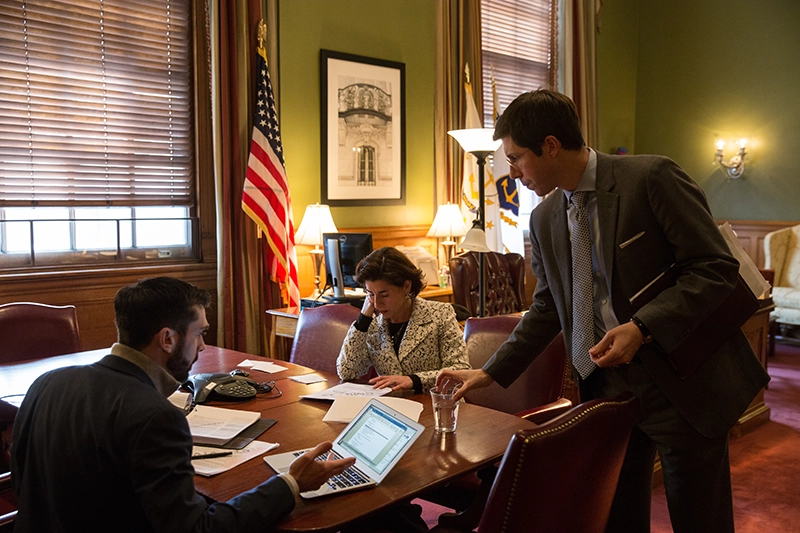
A native of Maryland, Raia served in communications roles in his home state after graduating from PC with a bachelor’s degree in political science and earning a master’s degree in political communication from George Washington University. He returned to Rhode Island in 2012, hitting the ground running in public relations positions at Providence City Hall and as Governor Gina Raimondo’s senior communications and public relations advisor.
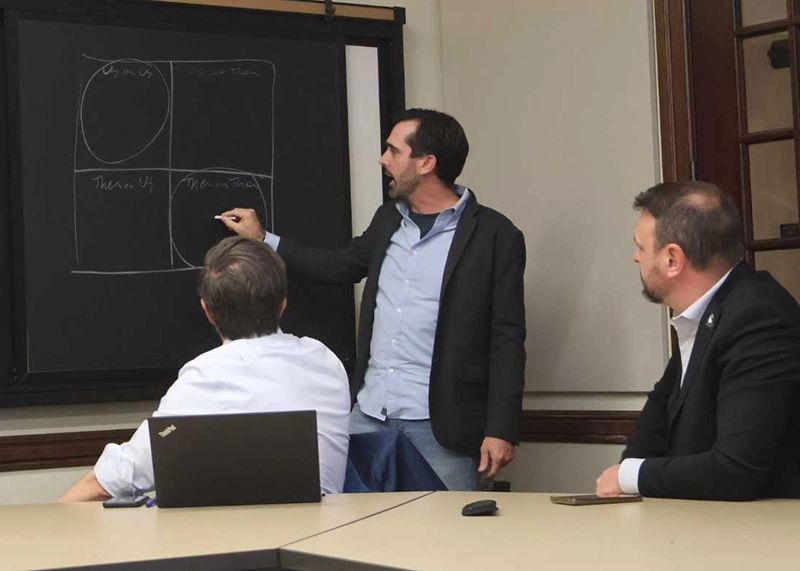
Raia began offering media training sessions to faculty and staff members at PC in 2023. Participants benefit from small roundtable discussions and follow-up one-on-one sessions on strategies, including interview prep, op-ed writing, marketing, and even suggestions for enhanced classroom engagement.
His enthusiastic yet conversational style has resulted in informative and helpful tips to engage with the media on all levels (local, national, international) and platforms, including radio, television, podcast, print, and social media.
“The aim is to help faculty translate deep subject-matter expertise into clear, accessible, and engaging insights for a broad public audience,” Raia said. “In today’s fast-moving media environment, expertise alone isn’t enough — context, clarity, and relevance matter just as much. These sessions are designed to help faculty understand how journalists think, how audiences consume information, and how to confidently show up as authoritative but conversational voices on the issues they study every day.
“Ultimately, the work is about equipping faculty to help the public better understand the complexity of today’s world while also supporting them in building their own reputations as trusted experts in their fields,” Raia said.
Rana Hassan, Ph.D., visiting assistant professor of media and communication studies, found Raia’s session informative.
“As an instructor, I strongly believe that engagement with industry professionals is one of the key pillars of success in any course,” Hassan said. “Mike addressed a wide range of questions related to the public relations field, including client pitching processes, strategies for polishing images and managing reputations, and more.”
Hassan enjoyed the training session so much that she invited Raia to speak with her students in her Introduction to Mass Media classes.
“By sharing real-world insights into public relations strategy, crisis communication, media relations, and audience engagement, he bridged the gap between academic concepts and professional practice, giving students a glimpse into media practices,” Hassan said. “It was a great conversation as students were exposed to industry realities and career pathways.”
Patrick Kelly, Ph.D., professor of accountancy, whose research on sports betting and casinos is often quoted by the media, has participated in multiple sessions with Raia.
“Interacting with the media is different from presenting research at academic conferences, and there is much to learn about effectively communicating with a broader audience,” Kelly said. “Mike is a tremendous resource when it comes to understanding the media landscape. He emphasizes the importance of being strategic — identifying your audience, clarifying your core message, and establishing credibility. These practices help build trust.”
Kelly also met with Raia separately to discuss his research and how it might be best communicated to a wider public audience.
Raia is a coach outside the classroom, too. He manages a youth baseball team and serves as vice president of the Little League in Barrington, Rhode Island, where he lives with his wife, Kristin Ellis Raia ’05, and their two children. Mike and Kristin met at PC while working together on The Cowl. His agency is named after Half Street in Washington, D.C., located near the stadium of his beloved Washington Nationals. It’s a spot where his fond memories are deeply rooted. The same can be said of Providence College.
“Being able to return and support faculty who are doing important, often complex work — and help amplify their voices beyond campus — feels like a full-circle moment and a way to give back to an institution that helped shape my career,” Raia said.
Tips from Mike Raia ’05
- Respect your audience. They’re smart, curious, and interested … but they’re likely not experts. Most audiences don’t begin with the same assumptions, language, or context as you do. Starting where people are helps your message land in a way that’s understandable, relevant, and meaningful beyond your own field or organization.
- Offer something new, unique, or provocative — ideally all three. Journalists are navigating crowded news cycles and limited attention. Clear insight that adds something fresh or challenges conventional thinking is far more likely to resonate and get traction.
- Don’t dodge a reporter’s question, but don’t feel obligated to answer it strictly on their terms. Strong interviews are guided, not improvised. Be clear about your core messages, respond honestly, and don’t be afraid to repeat yourself.
- Use anecdotes and stories to explain and contextualize complex ideas, issues, and data. Stories help audiences understand why an issue matters, not just how it works. If people need a calculator or another browser tab to follow your point, you’ve likely lost them.
- Confidence and clarity build trust. Audiences are more likely to trust experts who speak plainly and with purpose. Confidence doesn’t come from having every answer — it comes from communicating with intention and integrity.
Mike Raia ’05 founded Half Street Group in 2020. The agency has advised dozens of nonprofit, social impact, higher education, and corporate organizations throughout the mid-Atlantic and northeast.