

Tom Palamara ’77SCE on the early days of women’s ice hockey
Tom Palamara ’77SCE on the early days of women’s ice hockey
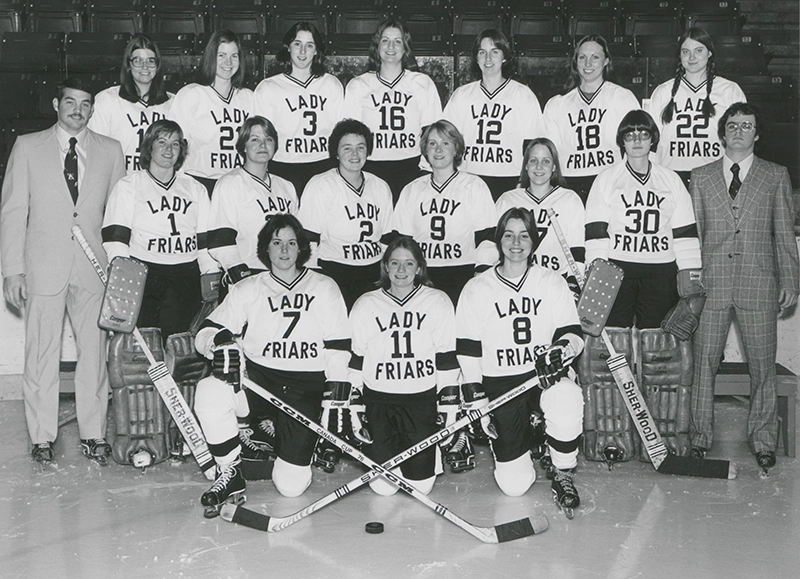
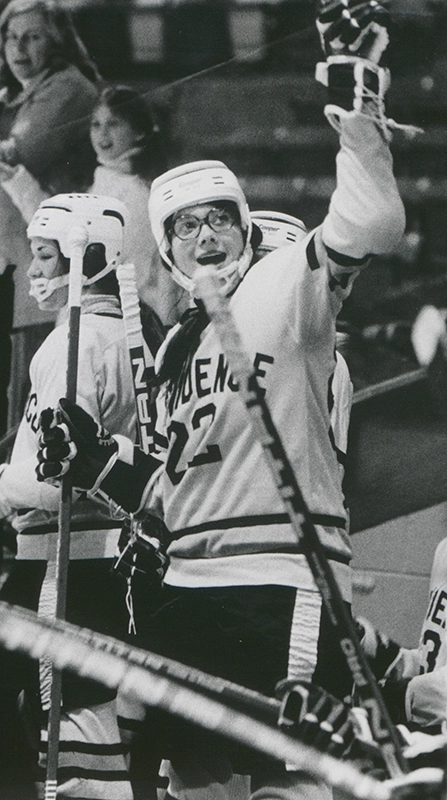
Tom Palamara ’77SCE was the first coach of women’s ice hockey at Providence College. In an interview for the Spring 2026 issue of Providence College Magazine, he reflected on building the program from scratch and watching the sport grow into an Olympic and professional force.
Providence College: Tom, women’s ice hockey is enjoying a surge in popularity right now. From the success of the United States Olympic team to the rise of the PWHL professional league, the sport has never had more visibility. When you watch the game today, what makes you most proud about how far it has come?
Tom Palamara: The biggest thing is the legitimacy of the sport and the caliber of play. When we started, recruiting was very informal. I was literally recruiting players out of the cafeteria. There was an intramural group that played and I would go down to the rink late at night when they were playing and try to recruit from that group. There really was no formal structure.
Eventually we recruited players like Kathy Lenahan ’81 and Connie Ritcher ’81, our first scholarship players. They were the very early adopters of women’s ice hockey players who had the ability and desire to play in college. It was these players who allowed the program to begin recruiting from high-caliber programs in places like Connecticut and Massachusetts. In the beginning you simply took whoever wanted to play. Now we had a pipeline and examples of what the future could be for other young women. They were our scholarship pioneers.
Seeing where the sport is today is remarkable. The level of play is outstanding. In our first year we lost 21-0 to a group of 12-year-old girls. That tells you how far the sport has come and how exciting it is that so many opportunities now exist for young players.
I remember an article in The Hockey News in the mid 1970s about the Providence College women’s team. The article was titled the “Women of Winter.” The writer asked me whether women’s hockey would ever be in the Olympics. At the time it seemed unlikely given how new the sport was. Of course, I said it could happen if the sport continued to grow. Looking back now and seeing Olympic gold medals and professional leagues is incredible.
And this year’s Olympic gold medal stirred the pride of Friars everywhere who remember 1998.
Yes. There were seven former Providence College players on that American team that won the first Olympic gold medal. That was something special. To think they played in the same rink and dressed in the same locker room as our first teams. It was a very proud day for Helen Bert (PC’s first women’s athletic director) and all the early teams I was a part of.
One of the most striking things about the modern game is the pace and the skill level. When you watch the Olympics and women’s pro hockey today, the speed and passing are remarkable. Does it ever surprise you how far the game has evolved?
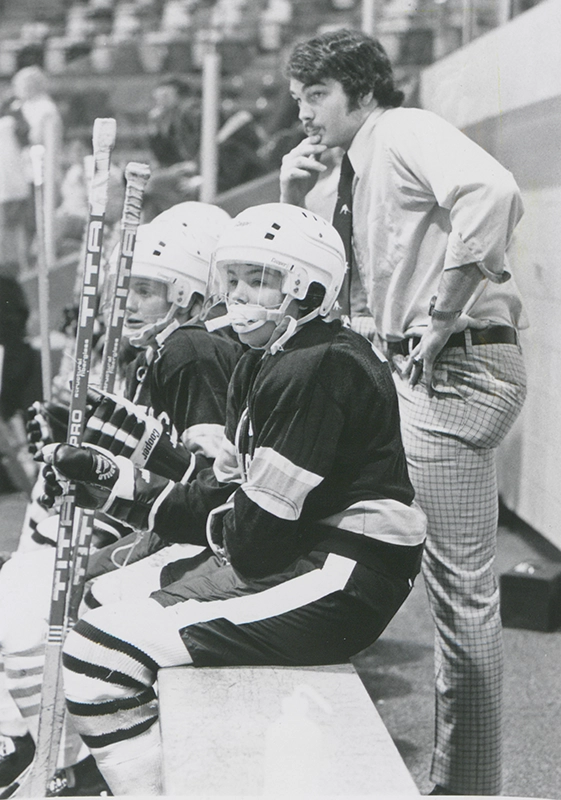
Absolutely. When we started, we were teaching players everything from the ground up. There was a book written by Bobby Orr that showed step by step how to put on hockey equipment. I actually used that book with our players.
After my freshman year I purchased all the equipment for the team. I handed out the gear and showed everyone how to put it on. That is where we began. It was a humble beginning.
From there you teach skating, puck handling, positioning, and the structure of the game. It is a progression. By our third year we had a winning season and from that point forward the program continued to grow and became a powerhouse in the East.
Today the individual skill level and the pace of the game is amazing. Even young girls in the different leagues around the country are doing things with the puck that would have been unimaginable when we started. Equipment has also improved and skill development programs are far more advanced.
Some of those early players had probably learned to skate on figure skates.
That is right. A few players came to tryouts wearing figure skates. We had to transition them to hockey skates and teach them how to stop without relying on the toe pick. Those were the kinds of things we were figuring out in the early days.
Let us go back to the origin story. You were a sophomore at Providence College. How did you end up starting a women’s hockey program?
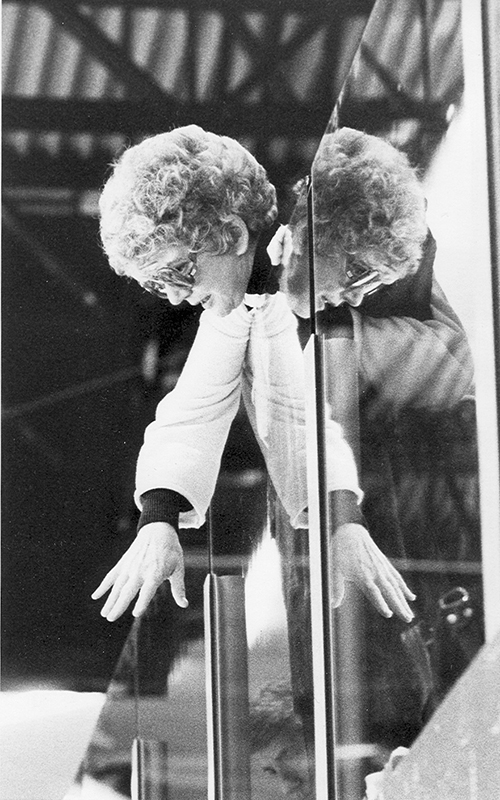
It actually was not my idea. The idea came from Helen Bert. She had been brought in to build the college’s women’s athletics program as women only entered the school in 1971.
I arrived at Providence in September of 1973, the same year Schneider Arena opened. There was no freshman hockey team that year, so I started working at the rink. I sharpened skates, swept floors, and even drove the Zamboni for a while.
Helen approached me and asked if I would start a women’s hockey team the following year. I honestly did not know if she was serious. I went back to the rink and talked with Bob Bellemore ’66, ’94G, who was an assistant coach for the men’s team. He said, “I’ve seen you play and you could probably make the club but you and (men’s head coach) Lou (Lamoriello ’63, ’01Hon.) will kill each other. So you’re better off starting the team, putting your name on it, and moving forward.” Lou was the general manager of the rink as well as the men’s hockey coach. He actually became someone I still look up to and he was a mentor to me.
So I went back to Helen and said I would do it.
Then reality set in. We had nothing. No equipment, no ice time, no coaches, and no trainers. That summer, I ordered equipment for about 20 players. I was 17 years old and buying all of the gear for a college hockey team. It was a crazy and intimidating task.
Helen had a very simple philosophy. Whatever the men’s teams had, the women’s teams would have as well. That belief and focus gave us the foundation we needed.
What gave you the confidence that the program could succeed?
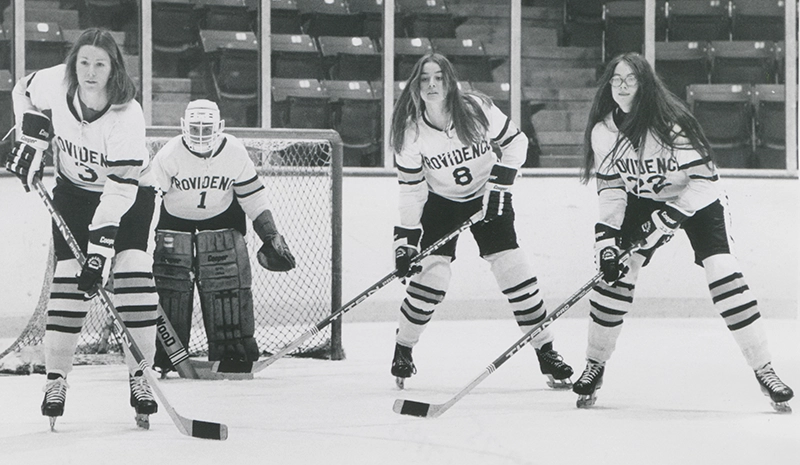
I never really thought about failing. Helen believed in the program and the players believed in it too. They wanted the chance to compete and really rose above all the obstacles.
People often asked me what it was like coaching women. My answer was always the same. I was coaching athletes. The same coaching approach applied to women as well as men. Athletes really don’t have a gender when you are coaching; you are coaching a hockey player.
From the beginning the players were committed. They wanted to get better and they wanted to build something meaningful. They knew they were part of something special and Helen made sure we felt that love and pride.
What were the biggest challenges early on?
The biggest challenge was legitimacy. The administration supported us, but a lot of people came to games expecting to laugh. Then they would watch and realize the hockey was actually pretty good. We had to prove to ourselves first that we deserved the right to play as one of the early women’s college hockey programs in the country before we could really show others. It took us only three short years to go from novices to hosting winning record.
Even today the women’s game has a rhythm that makes it very watchable. You can see the strategy develop and the pieces of the game come together.
Do you remember a moment when you realized the program had truly taken hold?
Yes. We were playing Colby during our third season. They had a star player and people kept asking how we were going to stop her.
I told someone that I would figure out how to stop their best player, but they were going to have to figure out how to stop our entire team. That was the moment when I realized we had become a legitimate program. We won that game and that season started the tradition of winning seasons for the program.
Another big moment came during a game against Brown. They scheduled us during their alumni weekend and probably expected an easy win. Instead, we went out and beat them. That gave our players tremendous confidence as we dominated from the opening faceoff.
Today people talk a lot about culture and identity in sports programs. How did you build that without any history to draw from?
I leaned on the culture that already existed at Providence College. The men’s hockey program was well-run and Helen was building strong women’s programs across the department.
I did not have to invent a culture. I simply followed the example that was already there.
Players from the men’s team were also supportive. They would come watch our games and encourage the team. That support meant a lot.
Many of the players from those early teams remain close today. What does that mean to you?
It shows how real the experience was. The players cared about the school, about each other, and about the team. Those relationships cannot be manufactured. They come from shared commitment and effort.
One of our early captains passed away several years ago. At her funeral, her hockey stick was placed in the casket. That tells you everything about what the team meant to those players.
Those early teams were a very special group. I had the privilege to coach for six years and each team shared a very special bond that is still strong today.

When you look at the Providence College program today, how does it make you feel?
It feels great. There was a period of time when the history of the program had faded a little, but coach Bob Deraney helped bring that history back into the program.
Today the players understand that they are representing not just themselves, but everyone who helped build the program before them.
When I visit campus and see the facilities and the success of the team, I feel proud of what the program has become. Providence College has a strong program that is respected across the country and to be a part of that is extremely rewarding but the visionary Helen Bert and those six original founding teams, they deserve all the credit.
When you think about the next generation of players, what do you hope they experience that reflects what your players experienced?
The opportunities today are incredible. My granddaughter plays hockey and tournaments are packed with girls’ teams at every age level.
When we started, I was recruiting players out of the cafeteria. Now there are leagues full of talented young players.
The future of women’s hockey is very bright. With youth development programs, college hockey, and professional leagues all expanding, young players now have a complete pathway in the sport.
Thank you for sharing these memories and insights.
It was my pleasure. When I look back, it all comes down to Helen Bert, the school, and the players who believed in the program. Coaching at Providence College was an incredible experience. It truly changed my life.
The Fund for Providence College supports the academic, athletic, and personal development of Friar student-athletes. Through the Varsity Athletics designation of PC’s annual fund, programs like women’s ice hockey are positioned to thrive on and off the ice.