

The Last Word: Solidarity
By Dr. Dana L. Dillon
How can we be in real solidarity with people who live in a different country from us? How can we be in solidarity with those who don’t speak our language, or who believe in a different religion, or with whom we really, really disagree?
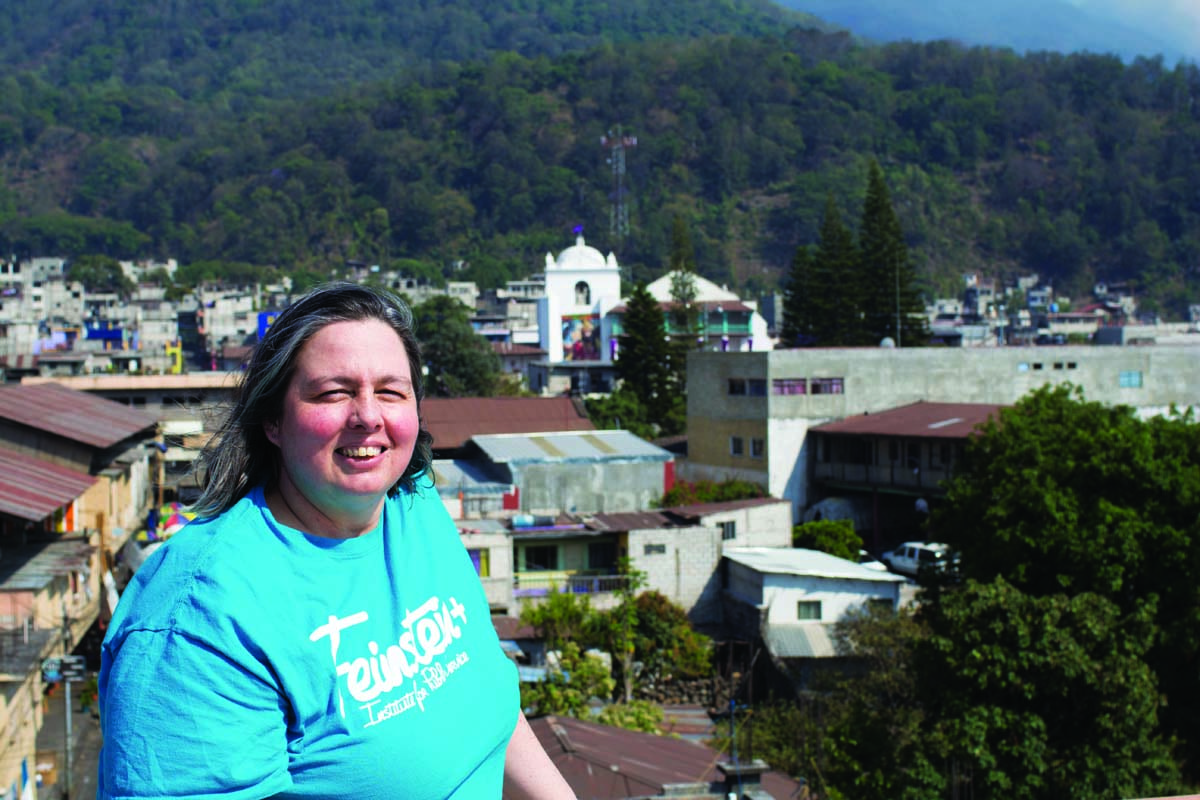
These questions echoed through the classroom of THL 375: Global Service in Solidarity, which I teach.
The students and I had spent a week together over spring break at San Lucas Tolimán Mission on Lake Atitlán in Guatemala. We had worked closely with locals, building stoves, clearing brush, mixing and laying concrete floors, moving tons of rocks and dirt. We had felt the “warm fuzzies” of welcome and connection, of sharing labor and goals and meals, of that desire to connect and be friendly. And we had also felt the gaps: the linguistic, cultural, and economic divisions.
In Guatemala, Providence, and elsewhere, we live in a world that is deeply divided along all these lines and others, and conversations about what matters most are increasingly polarized. Many of us spend our time and energy with others much like ourselves; we have become used to conversations that are echo chambers of agreement; we avoid those who would argue with us.
But Christian faith, especially Catholic social thought, calls us to see something more. Deeper than all that divides us are important things that we share. We are made in the image of God, a trinitarian God who has made us for relationships both with Him and one another by our very nature. Because of this intrinsic connection, we have a common good. St. Pope John Paul II saw solidarity both as this bond of interdependence among us and as the moral virtue by which we live the reality of that bond. He calls solidarity “a firm and persevering commitment to the common good, that is to the good of all and of each … because we are all really responsible for all.”
Solidarity can be a buzzword, used also for merely superficial connections, but it is a word whose depths are worth exploring. Imagine if each of us firmly committed ourselves to the flourishing of every member of our human family — not just over spring break, not just the neighbor “deserving” of help, but every single person, even our enemies.
How can we live in deeper solidarity in the most divided and divisive places in our lives? It is a question worth struggling with, not only for students for a semester, but for all of us for a lifetime.
Dillon is associate professor of theology and of public and community service studies.